During emergencies, cardiac arrest does not literally mean the heart has stopped – it is usually caused by a life-threatening arrhythmia known as ventricular fibrillation.
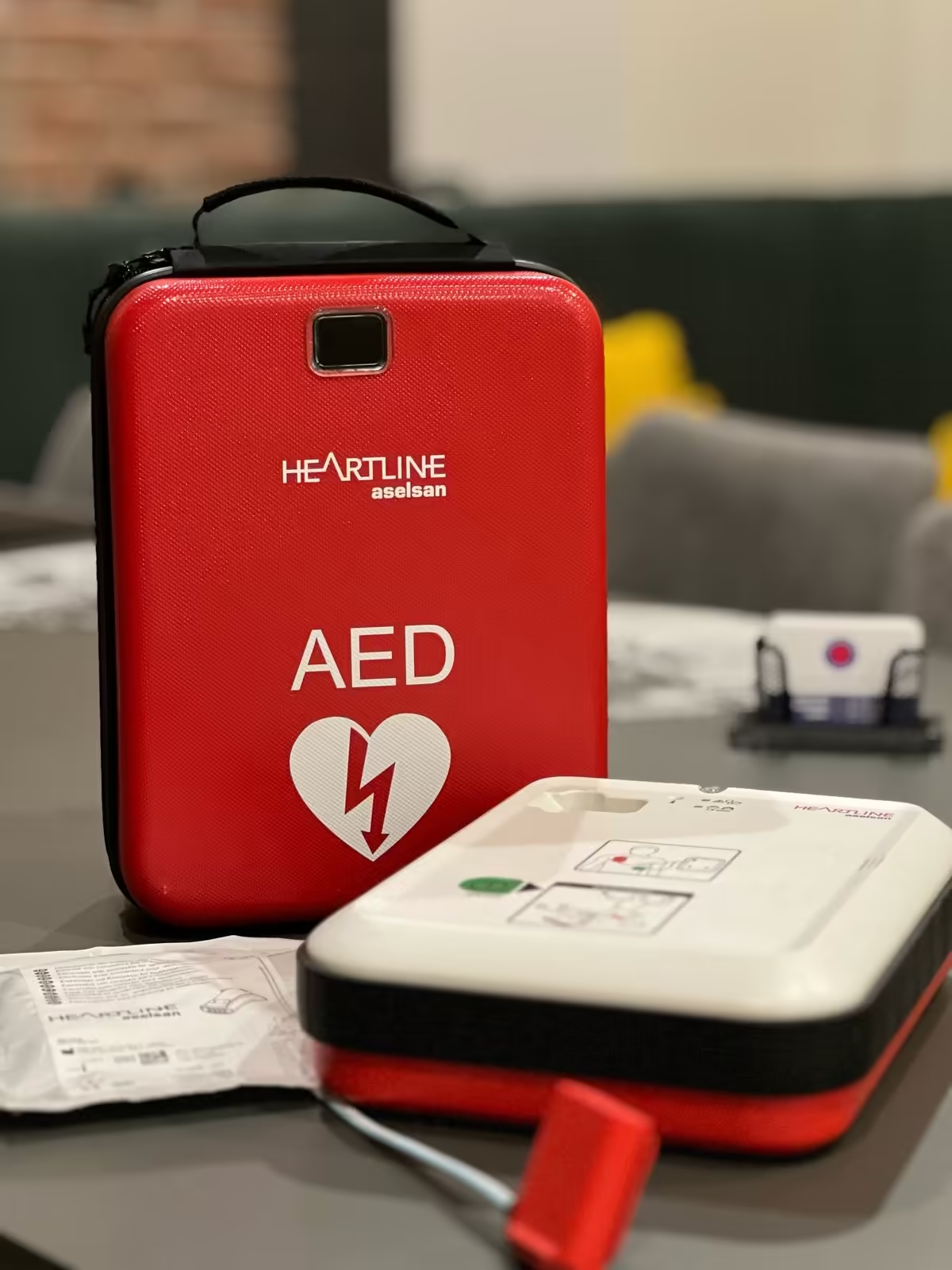
Fibrillation is detected and treated through defibrillation, delivered by an AED.
Defibrillation restores normal heart rhythm – essentially performing a “restart” of the heart.
Defibrillation is most effective within the first 3 minutes and doubles or triples the chances of survival.
Every minute of delay in defibrillation reduces the victim’s chances of survival by 10%.
Price
3,200 GEL (3,900 GEL with Premium Package)
Please note that medical equipment is exempt from VAT;therefore, VAT cannot be deducted from the listed price.
For orders of 5 or more units, the price will be adjusted. Contact us for a quote.
Additional Accessories Pricing
Item
Estimated Replacement Interval
Price
Adult Pads
Every 2–3 Years
350 GEL
Pediatric Pads
Every 2–3 Years
330 GEL
Battery
200 Shocks / 2–5 Years (Varies by Batch)
800 GEL
Item
Adult Pads
Estimated Replacement Interval
Every 1–2 Years
Price
410 GEL
Item
Pediatric Pads
Estimated Replacement Interval
Every 1–2 Years
Price
495 GEL
Item
Battery
Estimated Replacement Interval
200 Shocks / 5 Years
Price
915 GEL
Prices include VAT (individual replacement parts for medical equipment are subject to VAT and the paid VAT can be deducted).
Please note that replacement parts pricing may change depending on the USD exchange rate.
f you use the defibrillator in an emergency, we will replace the pads free of charge. You will also be enrolled in the First Aid Center Club, where you will receive rewards and special offers at our center.
FAQ
Why is an Automated External Defibrillator (AED) important?
During emergencies, cardiac arrest does not literally mean the heart has stopped — it is usually caused by a life-threatening arrhythmia known as ventricular fibrillation. Fibrillation is detected and treated through defibrillation (shock), delivered by an AED. Defibrillation restores normal heart rhythm — essentially performing a “restart” of the heart. Defibrillation is most effective within the first 3 minutes and doubles or triples the chances of survival. Every minute of delay in defibrillation reduces the victim’s chances of survival by 10%.
Is it easy to use an Automated External Defibrillator (AED)?
The AED is specifically designed to be easy to use by people of any profession who have completed a brief training.
As soon as the device is turned on, it begins giving voice instructions and guides the user step by step through the entire process.
What happens if I use an Automated External Defibrillator (AED) on a person who has simply fainted and does not actually need defibrillation (shock)?
The AED analyzes the victim’s heart rhythm and will only recommend defibrillation and allow a shock to be delivered if it detects an appropriate shockable rhythm.
What should I do if I forget the steps for using an Automated External Defibrillator (AED)?
Applying the Automated External Defibrillator (AED) electrode pads, operating the device, and delivering defibrillation (shock) is simple and straightforward. The AED is equipped with voice instructions that guide you step by step.
After completing a brief training, the AED is very easy to use for anyone, regardless of profession.
Should I perform CPR first or use the Automated External Defibrillator (AED)?
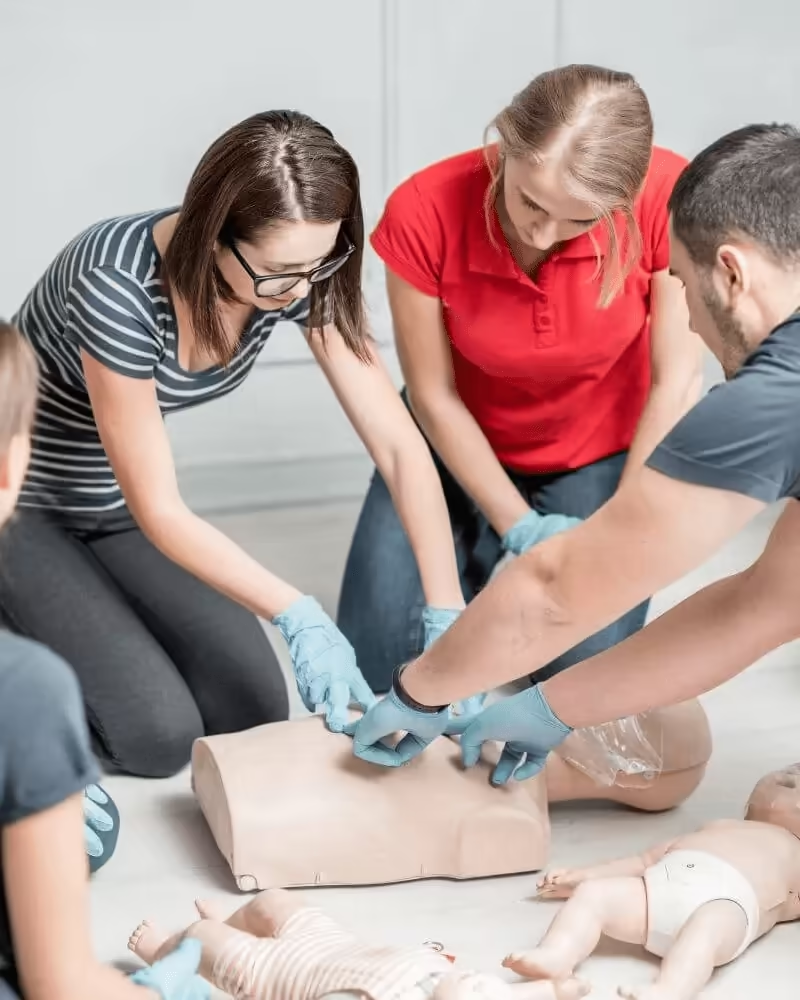
Continue CPR until the AED is brought to you.
As soon as the AED is available, apply the electrode pads to the patient’s bare chest and follow the voice instructions. The AED will tell you when to resume CPR.
If defibrillation is so important, then why should I still perform CPR?
CPR ensures the circulation of oxygen-rich blood to the heart and brain. This circulation slows the death of both brain and heart muscle cells.
CPR essentially “buys time” until an AED becomes available.
Do the defibrillator electrode pads need to be removed before continuing CPR?
No. The electrode pads remain in place throughout the entire resuscitation process and until the patient is handed over to emergency medical personnel.
If both defibrillation (shock) and CPR are successful, should the Automated External Defibrillator (AED) electrode pads remain on the patient?
Yes. Even after successful CPR, there remains a risk of fibrillation recurring.
The AED continues to monitor the patient’s heart rhythm and, if needed, reactivates its analysis every two minutes after CPR is paused. The AED must remain turned on until emergency medical personnel take over the patient’s care. The defibrillator electrode pads are single-use.
What happens if I cannot perform all the CPR and defibrillation (shock) steps perfectly?
A cardiac arrest episode creates an extremely stressful situation.
Even when experienced physicians perform the procedure, not everything goes perfectly every time.
In such moments, performing CPR even imperfectly and using an Automated External Defibrillator still provides life-saving assistance to the patient.
We can minimize errors by completing first aid training at least once every two years – safety and emergency preparedness should be a part of our everyday culture.
Can the electrode pads be applied directly on a hairy chest?
The electrode pads must be applied directly to the skin.
If chest hair is so excessive that it prevents proper electrode placement and skin contact, the hair must be quickly removed.
A special razor is included in the kit for this purpose.
What should I do if I am not sure whether the patient needs defibrillation (shock)?
Remember the following rule: an Automated External Defibrillator (AED) should only be used when you would also begin performing CPR – that is, when the patient is unconscious and not breathing.
If the patient is unconscious, shows no signs of life, and you have an AED available, use the device immediately and follow its instructions.
Can an Automated External Defibrillator (AED) be used on a patient who has a pacemaker or is pregnant?
Yes, under no circumstances should you refrain from using an AED on a person who is in cardiac arrest (unconscious and not breathing).
What should I do if the patient has a medication patch or ECG electrodes on the area of the chest where the AED electrode pads need to be placed?
AED electrode pads must not be placed on a medication patch — such as a nitroglycerin patch — or on ECG electrodes.
The patch must be removed and the skin dried before AED electrode pads can be applied.
Do not touch the medication patch with bare hands, as you may develop an allergic reaction. Gloves are included in the AED kit for this purpose.
Can using an Automated External Defibrillator (AED) harm the patient?
If the device is used on an unconscious patient who is not breathing, the AED is safe.
The device independently assesses the heart rhythm and will only allow defibrillation (shock) if it is needed.
After the rhythm assessment, if the patient meets the criteria, defibrillation is essential.